The wrong loading equipment creates avoidable hazards, delays and structural limitations long after installation. Start with measured site conditions, then compare slope, capacity, operating duty and failure consequences so you can specify equipment that suits the vehicles, loads and traffic patterns you actually handle.
Key takeaways
- Measure dock height, vehicle-bed range, gaps, clearances, and staging space.
- Calculate ramp slope from rise and horizontal run before selecting ramp length.
- Match equipment to vehicle heights, load weights, traffic, and loading frequency.
- Require drawings, load ratings, safety features, and operating limits in the final specification.
Which site measurements determine your equipment choices?
Measure the dock height, highest and lowest vehicle-bed heights, and vertical difference before comparing equipment. Record trailer suspension variation, the gap between the vehicle and dock face, required lip projection, approach clearance, doorway width, required ramp length, turning areas and available staging space.
- Check the space needed to position and store a portable ramp, including forklift alignment space.
- Measure the highest load and the forklift mast position at the doorway, not just the building drawing’s clear opening.
- Note floor condition, drainage, traffic lanes, pedestrian routes and overhead obstructions.
- Mark fire routes and confirm that a ramp landing will not block them.
| Measurement finding | Equipment choice it informs | Failure if ignored |
|---|---|---|
| Dock height, vehicle-bed height range and vertical difference | Dock leveler, mobile ramp or stationary ramp | The unit cannot bridge the full vehicle range |
| Approach clearance, dock-face gap and lip projection | Dock leveler or ramp transition | The vehicle cannot approach safely or the lip cannot reach |
| Doorway width, highest load and mast position | Ramp, leveler or mobile unit at the building entrance | The load or mast strikes the frame |
| Turning area, staging space and storage space | Portable or mobile ramp | The ramp cannot be aligned, secured or stored |
| Floor condition, drainage, traffic and pedestrian routes | Any loading system | Settlement, water damage or vehicle-pedestrian conflict develops |
A ramp that fits between the dock and yard can still fail if its landing leaves no room for a forklift to align squarely. These measurements also expose overhead conflicts and show whether one dock leveler, ramp or mobile unit can serve every vehicle safely.
How should you calculate slope and load capacity?
A ramp slope calculation uses rise and run: divide the vertical rise by the horizontal run, then multiply by 100. A 900 mm rise over a 9,000 mm run produces a 10 percent slope.
| Grade | Main concern | Design check |
|---|---|---|
| Up to 10% | Traction and forklift stability | Confirm tyre grip, ground clearance and visibility |
| 10% | Transition and handling demand | Check approach and departure angles |
| Over 10% | Loaded travel direction | Carry the load upgrade, as required by OSHA |
As slope increases, forklift stability, tyre traction, ground clearance and operator visibility become more demanding. Check the approach and departure angles as well as the grade; a ramp can have an acceptable percentage but still foul the forklift’s underside at a transition.
Size the ramp or duckboard for the combined weight of the forklift, attachment, pallet and load. Then account for dynamic effects as the truck crosses the transition, rather than relying on a stationary, evenly distributed load rating.
Compare the rated capacity with both distributed loading and concentrated point or axle loading. Obtain the forklift’s front-axle wheel loads from its data plate or manufacturer, and ask whether the equipment rating covers each wheel load during entry.
Use the actual truck-and-load combination when checking aisle width. Load length, attachment offset, rack depth and pedestrian clearance can change the required turning space, so an unloaded truck’s nominal turning radius is not enough.
Which equipment type fits the loading task and site?
Match the equipment to the interface, traffic pattern and height change, not to the purchase price alone. A dock leveler fits a recessed dock with repeated truck access; other equipment suits different movements.
| Option | Best fit | Main limitation |
|---|---|---|
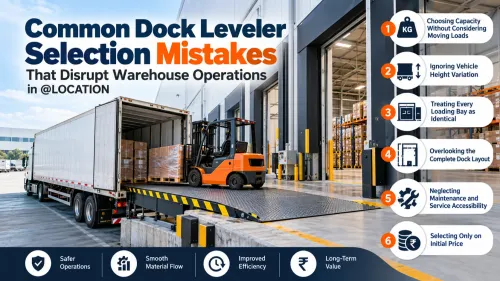
| Dock leveler | Permanent transition between a recessed dock and trucks | Needs a pit, adequate approach clearance and a vehicle-height range within its operating limits |
| Portable container ramp | Containers or ground-level vehicles reached at changing locations | Needs room for positioning, securing and storage |
| Stationary ramp | Fixed height change with predictable traffic | Does not adapt easily to changing locations or heights |
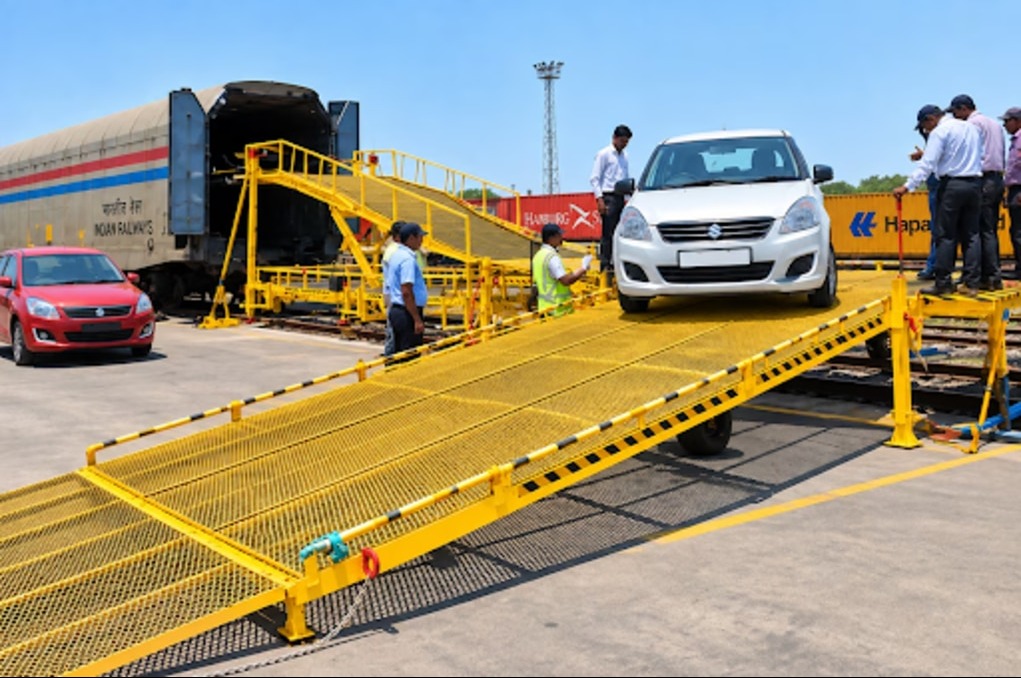
| Wagon ramp | Railway loading where a dock leveler is not the right interface | Designed for wagon access, not ordinary truck bridging |
| Mobile ramp | Several bays or yard positions | Requires safe movement, parking and access control |
| Stacker | Short vertical transfers and pallet placement | Not a substitute for bridging a vehicle gap |
Treat portability as a labour and traffic decision. A ramp is a poor choice when forklift handling is frequent, movement exposes workers to vehicle traffic or the unit can be left unsecured.
A dock leveler is unsuitable without a recessed pit, when vehicle heights exceed its operating range, when approach clearance is inadequate or when railway wagons form part of the workflow. Compare installation work, storage space, repositioning time and access control alongside purchase cost.
How should you choose leveler operation and dock safety features?
Choose operation by duty cycle, power availability, maintenance access and the consequence of failure during a live loading operation.
| Operation | Strength | What to manage |
|---|---|---|
| Hydraulic dock leveler | Smooth, controlled movement and high force | Inspect hoses and cylinders; control leaks and provide isolation after failure |
| Mechanical dock leveler | No hydraulic oil or power pack | Inspect springs, hinges, linkages and stored-energy parts |
| Manual dockboard | Minimal power dependence | Position it safely and accept greater worker effort |
Specify the high-truck and low-truck bed heights, dock height, trailer suspension range, dock-face gap and required lip projection. Nominal dock height alone can leave the leveler outside its safe operating range.
An edge-of-dock leveler has less vertical compensation and shorter lip reach than a pit-mounted unit. Choose it only for tightly controlled trailer heights; mixed fleets, unusually low vehicles or a shallow required transition favour a pit-mounted design.
Set trailer brakes and chock the wheels or use another approved restraint before loading. A vehicle restraint does not replace checks of the trailer floor, brakes or approach. A failure during live loading can cause trailer movement, a dropped bridge or a forklift fall.
Choose dock seals or shelters from the actual trailer envelope and loading pattern. A tight seal suits consistent trailers; mixed widths and misaligned arrivals need a more tolerant design that will not obstruct loading or tear.
What should the final specification prove before purchase?
A tonnage figure alone cannot prove that equipment will work safely. Require drawings and calculations showing capacity, load position, operating range, clearances, anchorage and maintenance access.
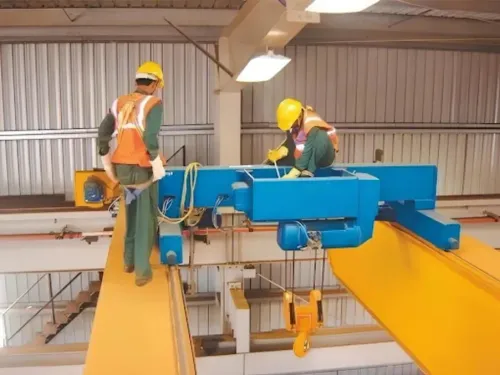
1. For an overhead crane, document the overhead crane duty cycle: lifts per hour, average and peak loads, travel distance, starts and stops, hook height, environmental exposure and time near maximum load. Two cranes with the same rating can require different structures and inspection frequency.
2. Calculate crane headroom for the bridge, trolley, hoist approach, structural deflection, lighting, sprinklers, roof services, maintenance access and the highest load. For cranes covered by OSHA’s general-industry rule, mark the rated load plainly on each side. Define frequent inspections at daily-to-monthly intervals and periodic inspections at one-to-twelve-month intervals according to service severity.
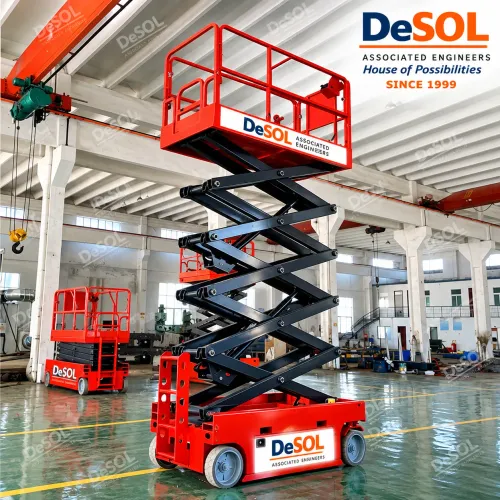
3. Specify a lift table capacity using pallet dimensions, centre of gravity, loading method, platform height, cycle rate and expected side-loading or pallet-truck impact. Do not use a pallet lift for people unless it is specifically designed and guarded for personnel.
4. Require the supplier to show anchorage, access for hinge, wheel, rope, hydraulic and electrical maintenance, and the actual load path in the drawing. Desol Associated Engineers can help compare these measured constraints across cranes, ramps, stackers and related handling equipment rather than treating each purchase as an isolated tonnage decision.
Related products
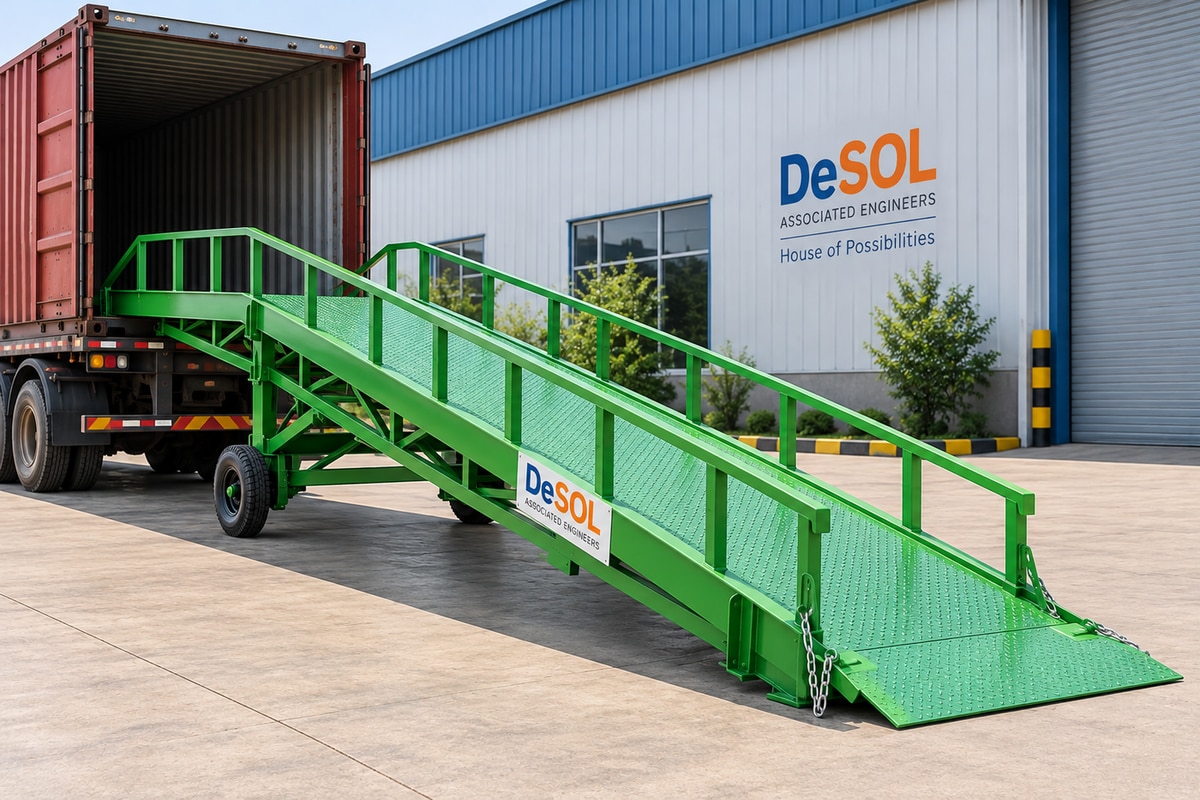 | Dock Leveler / Loading Bay Equipment Commercial Vehicle Dock Leveler DeSOL Commercial Vehicle Dock Leveler is a robust loading bay solution designed to bridge the height gap between the warehouse floor and commercial... View product → |
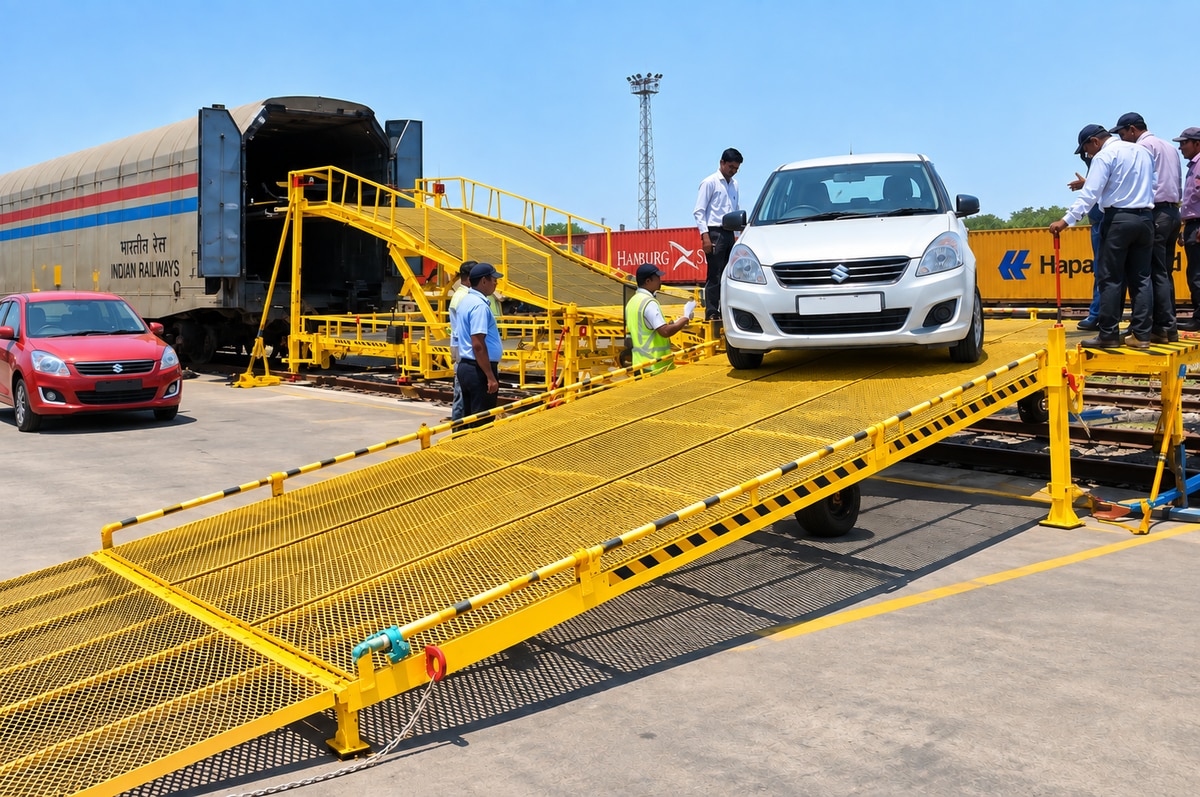 | Railway Loading Ramp / Wagon Loading & Unloading Ramp / Material Handling Equipment Heavy-duty Loading & Unloading Ramp designed for efficient and safe movement of vehicles between ground level and railway wagons. View product → |
Frequently asked questions
Which site measurements determine warehouse loading equipment choices?
Record dock height, the highest and lowest vehicle-bed heights, trailer suspension variation, vehicle-to-dock gap, required lip projection, approach clearance, doorway width, ramp length, turning areas, and staging space.
How should you calculate slope and load capacity?
Calculate slope by dividing vertical rise by horizontal run, then express it as a percentage or ratio. Size capacity for the combined weight of the load, pallet or container, and handling equipment, not the goods alone.
Which equipment type fits the loading task and site?
Compare dock levelers, fixed or mobile ramps, yard ramps, lift tables, and dock lifts against the height difference, vehicle range, load weight, traffic pattern, available run, and required mobility.
How should you choose leveler operation and dock safety features?
Choose mechanical, hydraulic, or air-powered operation based on usage and maintenance access. Specify vehicle restraints, dock lights, wheel chocks where appropriate, guardrails, bumpers, edge protection, and safe walkways.
What should the final equipment specification prove before purchase?
It should show measured dimensions, rated loads, slope, lip reach, operating clearances, compatible vehicle heights, safety features, materials, controls, maintenance access, and installation responsibilities.
Related products
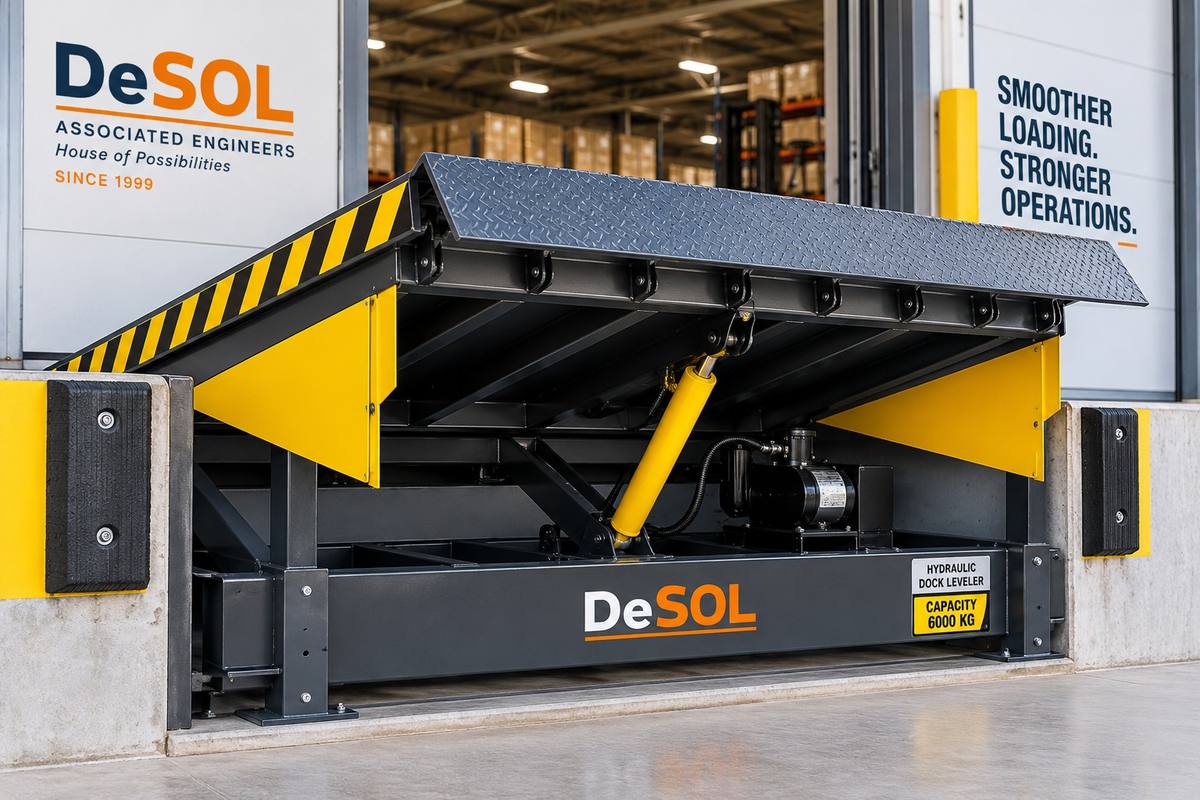 | A Hydraulic Dock Leveler is a high-performance loading dock solution designed to bridge the gap between a warehouse loading bay and a truck or... View product → |
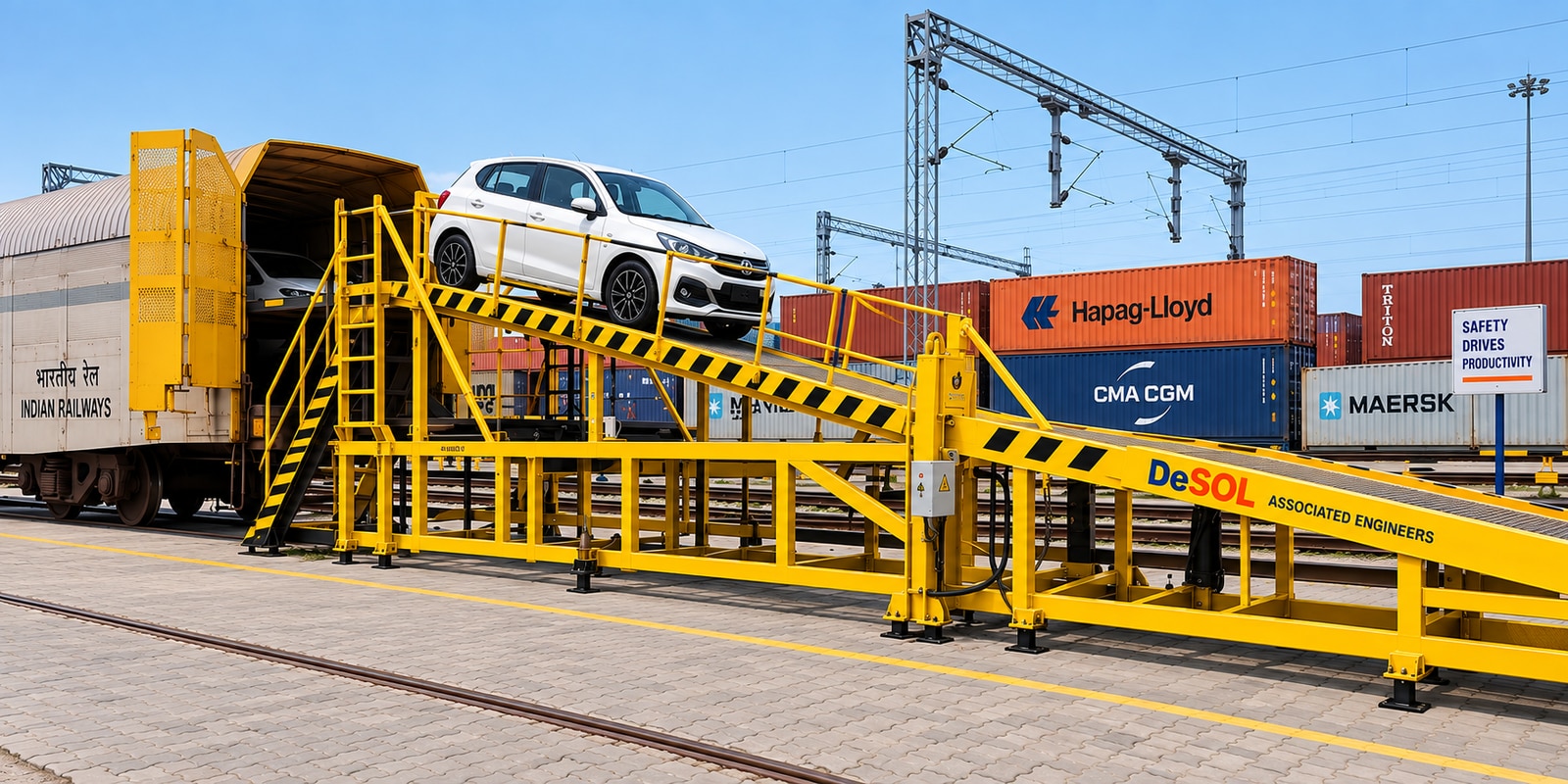 | Wagon Loading Ramp / Rail Loading Ramp / Material Handling Equipment Wagon Loading & Unloading Ramp Wagon Loading & Unloading Ramp is a heavy-duty industrial ramp designed for safe and efficient loading and unloading of vehicles and material from... View product → |
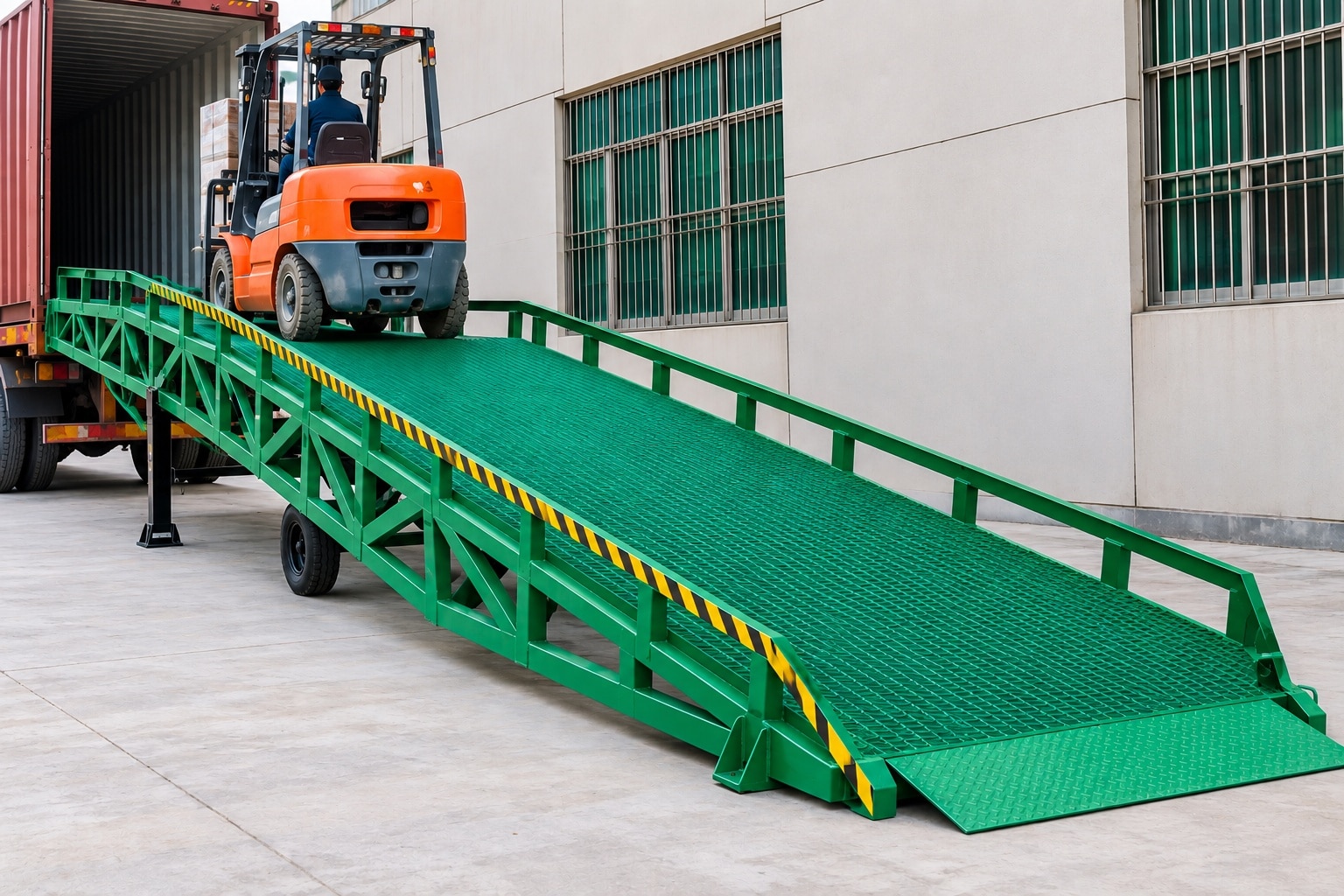 | Material Handling Equipment / Loading Ramp Portable Container Ramp The Portable Container Ramp by DeSOL Associated Engineers is a heavy-duty material handling solution designed to provide safe... View product → |
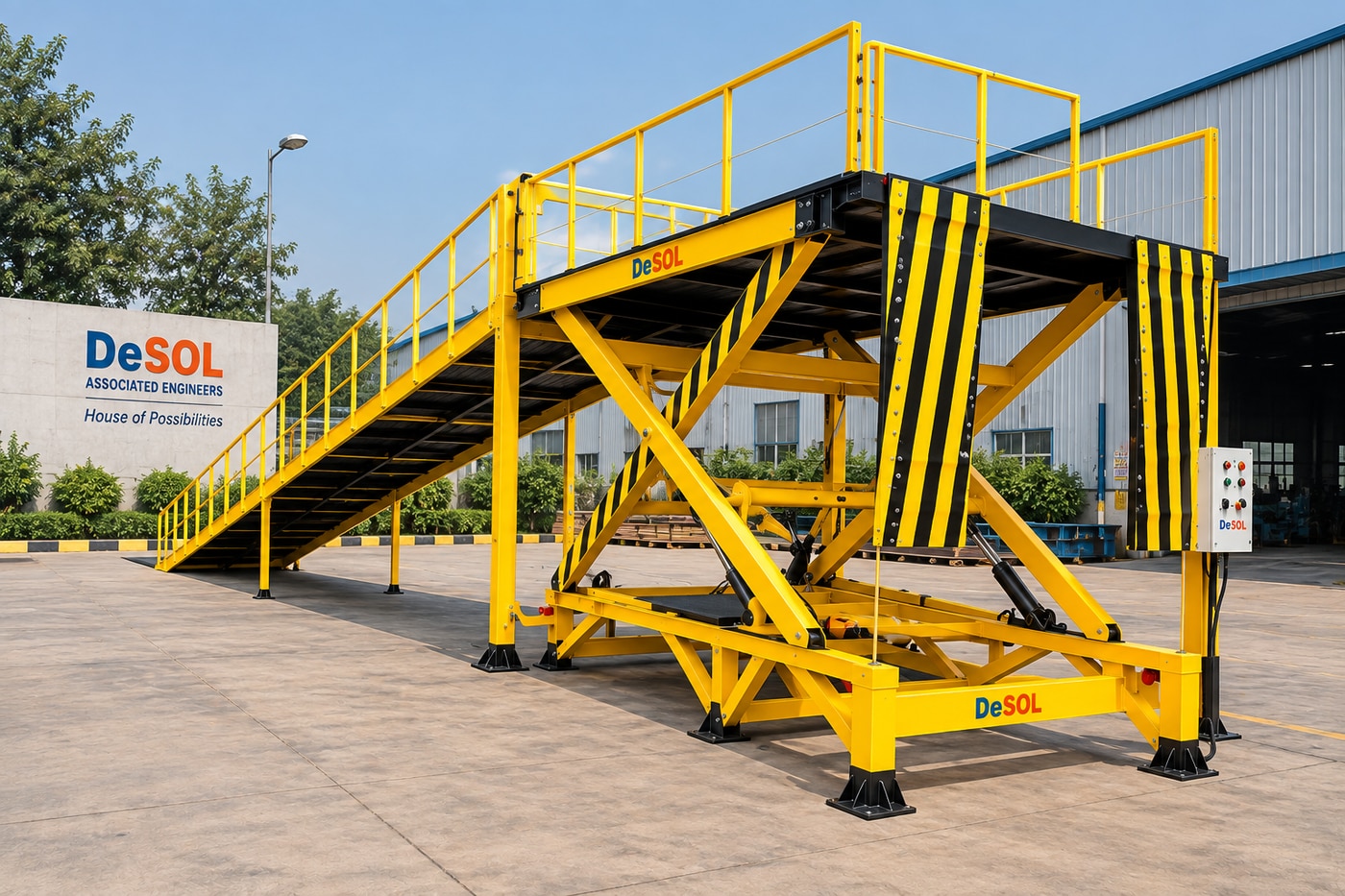 | Dock Leveler Stationary Hydraulic Dock Leveler by Desol Associated Engineers is a heavy-duty loading dock solution designed to bridge the height gap between warehouse platforms and trucks for... View product → |