Unexpected crane downtime usually begins with a small, detectable change: brake creep, gearbox noise, rope damage, an intermittent pendant control or repeated overload trips. By matching checks to workload, ranking defects by risk and documenting corrective work, you can intervene before a minor fault stops production and build a maintenance plan that fits your operation.
Key takeaways
- Treat slower travel, jerky lifting and repeated trips as early warning signs.
- Set service intervals by crane duty, load cycles and operating environment.
- Record recurring defects by component to find the cause of repeat stoppages.
- Return a crane to service only after defects, tests and safeguards are documented.
Find the early warnings before a crane becomes unavailable
A crane needs maintenance before it becomes unavailable when its movement, stopping, sound or electrical behaviour changes. Treat slower travel, jerky lifting, unusual vibration and repeated trips as early warning signs, not as minor inconveniences.
| Symptom | What it may indicate | Action before failure |
|---|---|---|
| Longer stopping distance or load creep | Brake wear, contamination or incorrect adjustment | Test the brake with the rated load and measure stopping performance |
| Cracking, birdcaging, flattened strands or kinks | Wire-rope damage at the rope, drum or sheaves | Stop using the crane and inspect rope diameter, lubrication and reeving |
| Grinding, whining or rising gearbox temperature | Gear, oil or bearing deterioration | Check oil level, temperature, backlash and bearing condition |
| Uneven bridge travel or rail-side vibration | Wheel-flange wear, skew or runway misalignment | Inspect wheels, rails, fasteners and end-carriage alignment |
| Intermittent controls or repeated overload trips | Loose connections, contactor faults or protection-system problems | Test pendant controls, contactors, limit switches and overload protection |
A hook with an enlarged throat, deformation or a damaged latch needs measurement against the manufacturer’s limit, not an informal visual sign-off. A crane that lifts but cannot stop or hold predictably can still cause unexpected crane downtime.
Record each symptom, measurement, crane identification number and corrective action. Do not return the crane to service until a competent person verifies the repair. Inspect a crane that has stood idle for a month or longer, including its wire rope, before switching it on.
Use a maintenance schedule based on duty, not a generic annual visit
Set the interval by hoist starts, load spectrum, shifts, travel distance, dust, humidity and corrosion, then confirm it against the manufacturer’s instructions. A lightly used warehouse crane does not need the same crane maintenance schedule as a multi-shift process crane.
1. Before each shift, operator checks should cover the pendant or radio control, emergency stop, hook and latch, wire rope, visible leaks, unusual noise, brake holding, travel motion and upper and lower limit switches. Stop the crane for a damaged rope, failed control, slipping brake or ineffective limit.
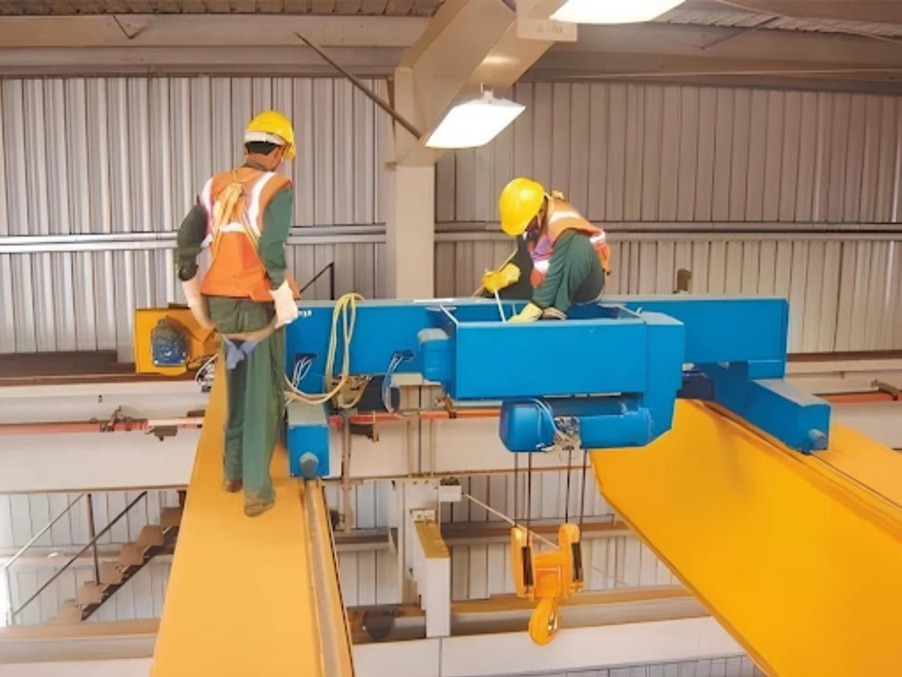
2. Each week or month, based on duty and environment, technicians perform frequent inspections of the rope, sheaves, drum, hook, latch, brakes, wheels, rails, end carriages, festoon cables, contactors and gearbox. Look for broken wires, kinking, crushing, bird-caging, corrosion or heat damage; do not accept “visually intact” as a rope condition.
3. Each quarter, perform periodic inspections with measurements: brake clearance and stopping performance, wheel and rail condition, gearbox oil and noise, motor current, bearing condition, pendant wiring, overload protection and limit-switch operation. Increase the frequency for corrosive or high-cycle service.
4. Annually, complete a thorough examination of the bridge structure, welds, end carriages, hoisting machinery, electrical protection and safety devices, and correct defects before release. Inspect any crane idle for a month or longer before recommissioning, with particular attention to its wire rope.
Record the crane ID, safe working load, running hours, defect, measurement, action, parts used, technician sign-off and next due date. Keep monthly records available; a defect without a corrective action and return-to-service decision is not maintenance.
Inspect the components that create repeat stoppages
Measure the parts that stop the crane repeatedly, then compare each reading with the manufacturer’s limit and its previous readings. A single inspection finds damage; a trend shows deterioration before the defect becomes a stoppage.
- Check wire rope for broken wires, corrosion, kinks and reduced diameter; inspect sheaves for worn grooves, cracks and misalignment. Rope diameter loss or a groove that pinches the rope points to accelerated wear.
- Measure hook throat opening, twist and wear, and test the hook latch. A widening throat or latch that fails to close turns a lifting accessory into a dropped-load risk.
- Measure brake lining thickness, brake travel and stopping distance, and inspect drums for scoring or cracks. Increasing stopping distance indicates brake adjustment or lining deterioration before the crane loses holding ability.
- Inspect motors, gearboxes, bearings, wheels, rails, festoon cables, contactors, pendant controls, limit switches and overload protection. Record abnormal noise, temperature, vibration, travel current and repeated trips rather than describing a fault as “OK” or “not OK.”
| Monitoring method | What it reveals | Measurement or warning |
|---|---|---|
| Visual and functional inspection | Rope, sheave, hook, brake, drum, limit-switch and control defects | Wear dimensions, stopping distance, switch operation |
| Thermography | Loose electrical connections, overloaded contactors and motor hot spots | Temperature compared with similar phases and earlier readings |
| Vibration monitoring | Developing bearing, wheel, motor or gearbox faults | Rising vibration at the same speed and load |
| Grease or lubricant analysis | Contamination and gear or bearing wear | Metal particles, water or viscosity change |
Use these methods together. Thermography will not find rope damage, and vibration will not prove that an emergency stop works.
Turn defect records into a clear return-to-service decision
A defect is not closed because a technician wrote “repaired.” Close it only when the hazard is controlled, the corrective work is recorded, and a named person authorises return to service. Under OSHA’s overhead-crane rule, hazardous conditions must be corrected before release; use lockout tagout while work is in progress.
- Record each finding in the crane inspection records against the crane identification number, safe working load, inspection date, running hours, measured result, defect description, corrective action, parts used, technician’s sign-off, return-to-service date and next due date.
- Apply defect prioritisation: remove the crane from service for a failed brake, damaged wire rope, unsafe hook, overload-protection fault or structural damage; restrict use for a developing defect with a defined repair deadline; schedule minor housekeeping work before it affects operation.
- Verify the repair before release. Test limit switches without a load where applicable, confirm emergency stops stop and isolate crane motion, and check that the original symptom has disappeared. Do not use an upper-limit switch as the normal stopping control.
Review closed records for repeated brake wear, gearbox noise, electrical faults or the same limit-switch failure. A crane idle for a month or longer needs a documented inspection before use, with particular attention to wire rope. This turns recurring repairs into planned corrective work instead of another unexpected stoppage.
Plan service windows and compare maintenance service models
Book a planned maintenance window around low-load shifts, changeovers or scheduled shutdowns, using hoist starts, running hours, lift frequency, load spectrum and travel distance rather than a calendar date alone. A multi-shift process crane needs a different interval from a lightly used warehouse crane.
Reduce the outage itself with a written job plan:
- Confirm the crane identifier, isolation procedure, work scope and return-to-service authority.
- Stage equivalent replacement parts, tools and lifting aids before isolation; spare-parts staging prevents a one-day repair becoming a week-long stoppage.
- Group brake, rope, electrical and limit-switch work into one window when the same access equipment is required.
- Test the repaired motion and its protective devices during post-service commissioning. A new hoist brake needs controlled raising, lowering, stopping and holding checks; a new limit switch needs travel-limit verification.
- Inspect a crane idle for a month or longer, including its wire rope, before energising it.
Compare maintenance models against these practical measures:
| Model | Strength | Check before choosing |
|---|---|---|
| Preventive maintenance contract | Scheduled labour, records and emergency support | Manufacturer-based intervals, response time, equivalent parts and documented release authority |
| In-house programme | Immediate operator access and site knowledge | Competent technicians, inspection tools, training, parts control and independent thorough examination |
| Hybrid programme | Site checks with specialist repairs | Clear handoffs, escalation times, records and post-service commissioning |
A contract is weak if it records defects without assigning corrective action and a release decision. Desol Associated Engineers can be assessed against the same evidence: parts traceability, technician sign-off, fault history and commissioning records.
Related products
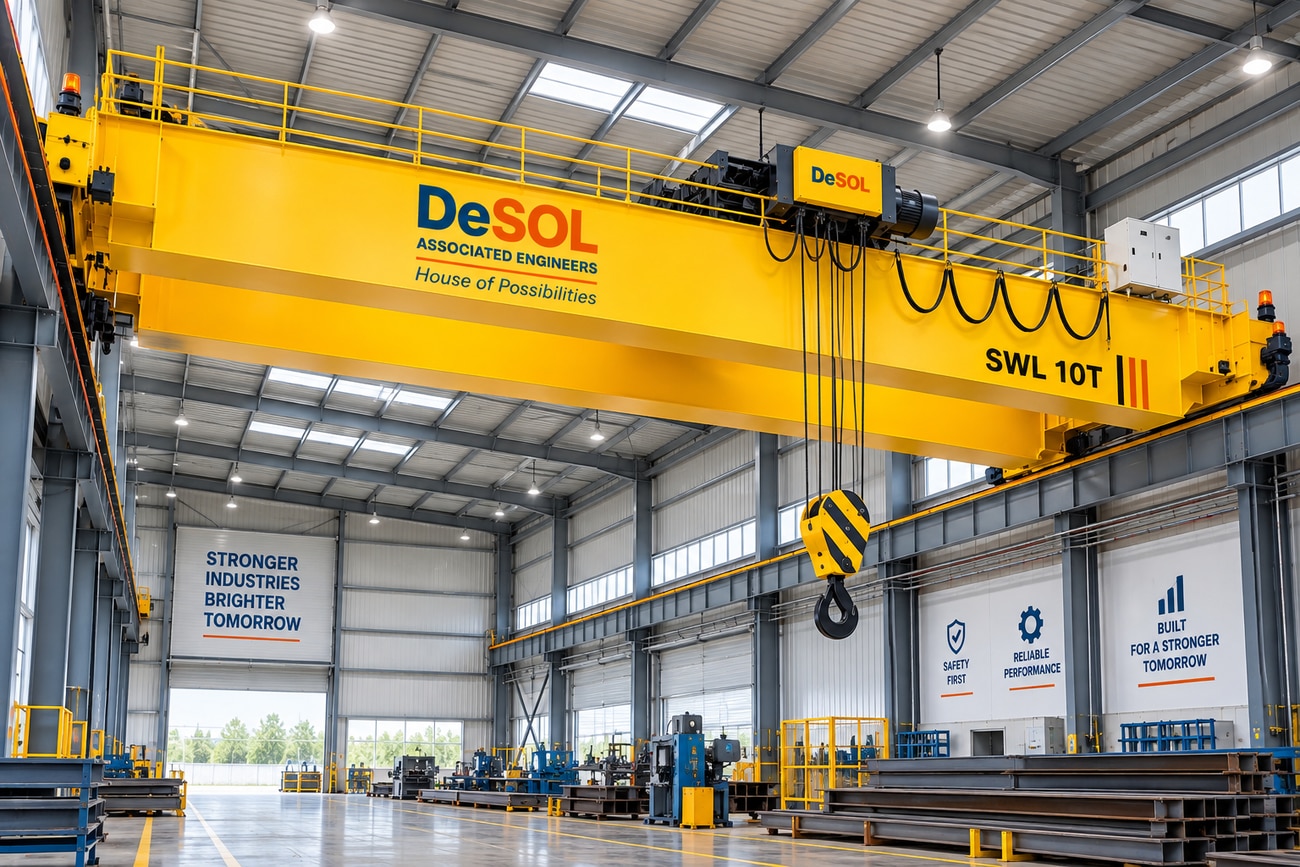 | EOT Crane / Overhead Crane / Industrial Lifting Equipment EOT Crane is a heavy-duty overhead material handling solution designed for lifting, lowering and horizontal movement of heavy loads across industrial... View product → |
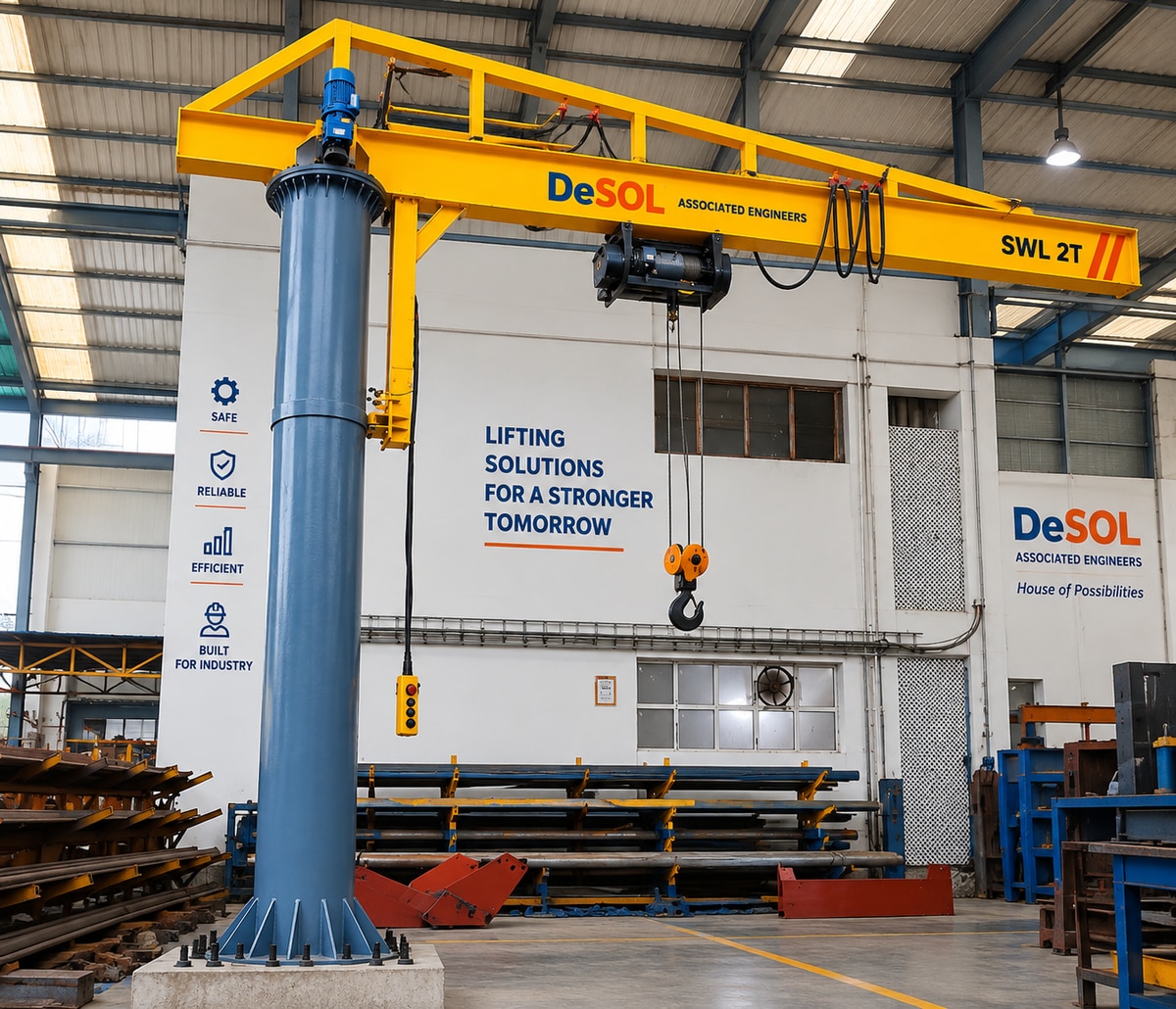 | Jib Crane / Pillar Mounted Crane / Material Handling Equipment Pillar Mounted Jib Crane is a heavy-duty material handling solution designed for efficient lifting and positioning of loads within a defined working... View product → |
Frequently asked questions
What are early signs that a crane needs maintenance?
Slower travel, jerky lifting, unusual vibration, changed operating sounds and repeated electrical trips indicate that you should investigate before failure.
How often should a crane receive maintenance?
Base the schedule on duty, load cycles, operating environment and defect history rather than relying on one generic annual visit.
Which crane components commonly cause repeat stoppages?
Inspect brakes, limit switches, contactors, motors, wheels, ropes, sheaves, pendant controls and runway alignment when the same fault returns.
When can a crane return to service after a defect?
Return it only after the defect is corrected, required tests are completed, safety devices work, and the inspection record identifies who approved operation.
How should you plan crane maintenance service windows?
Use defect trends and production schedules to plan service during controlled shutdowns, then compare in-house, contracted and manufacturer-supported maintenance models.